How do you feel about Shakespeare? Too difficult? Boring? In today’s culture of brief text messages and ultra high definition graphics, how can long passages filled with archaic language captivate audiences, especially an audience made up of children?
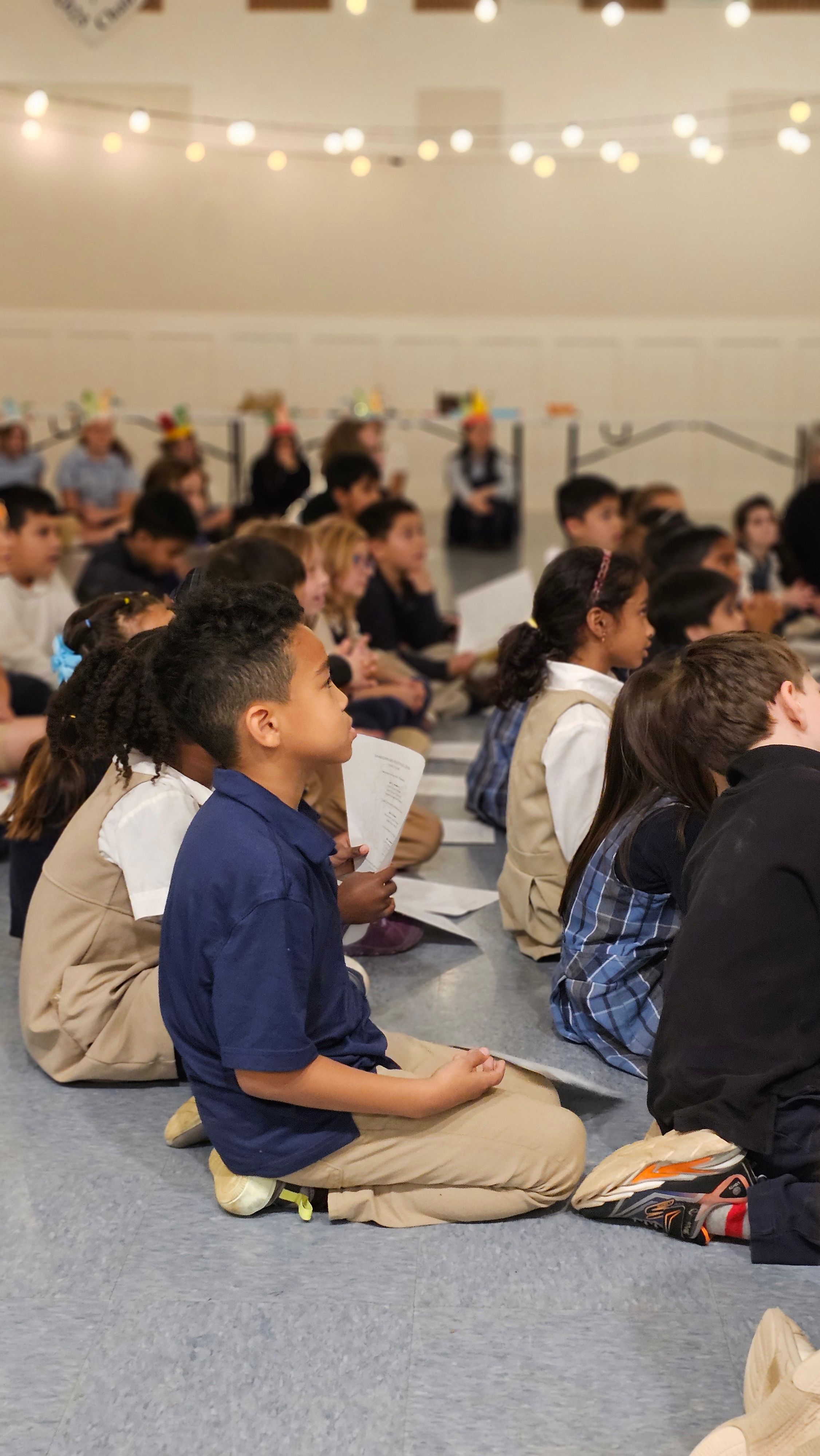
Each year Oak Hill rhetoric students read a play by Shakespeare and have to plan a festival which they invite the lower school to attend. Scenes with the original language must be incorporated, and activities to explore themes of the play have to be planned. Both have to be engaging.
Making Shakespeare relatable is not easy. This year the high school students had a doubly difficult task. Take Shakespeare’s most tragic of all plays, King Lear, and make it both enjoyable and relatable to kindergarten and elementary students. How did they do?
Reading and Understanding Shakespeare’s Lear To understand King Lear themselves, the rhetoric students had to learn more about Shakespeare’s own life and the context of the world in which he lived. So the first task was to research and make a rhetorical outline of the author, audience, context, etc. Then, students took a couple of weeks to read through the play in class, each reading an assigned character’s part. While reading, there were classroom discussions on the language and emerging themes and possible purposes connected to the context of Shakespeare’s life and times. The rhetoric students used the readings, discussion and research to write a response of their own to Lear.
Through the process of careful oral readings and discussions as a class, students began to see long passages filled with unfamiliar words, not as archaic language, but as rich descriptions of characters and actions and ideas. They enjoyed the words and the plot more and more. As they read, they noted possible scene selections they felt they could perform for a younger audience.
Lear: Dost thou call me fool, boy? Fool: All thy other titles thou hast given away; that thou wast born with. (Act 1, Scene 4, Lines 278-279)
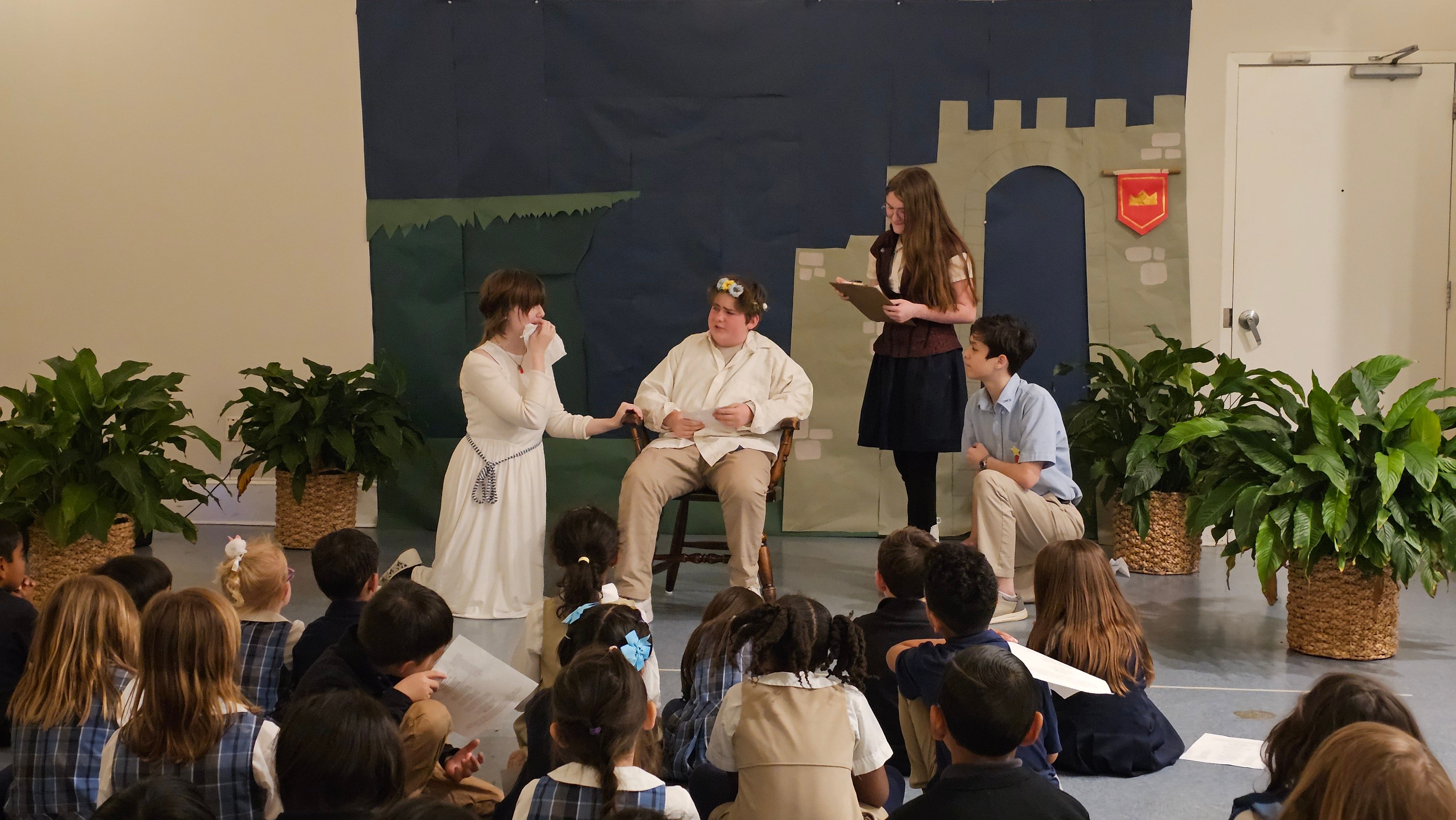
Planning and Hosting the Shakespeare Festival For those not familiar with King Lear, it is a dark comedy. It is full of tragedy: betrayal, ingratitude, lunacy, senility, death . . . But there are some funny and insightful scenes, too. For the festival, the high school students selected three. Act 1, Scene 4 in which King Lear is entertained by his fool while his eldest daughter, Goneril, chides her father’s foolish behavior. Act 4, Scene 6 where Gloucester, one of Lear’s noblemen, seeks suicide but is saved by his faithful son, Edgar, through loving deception. Finally, Act 4, Scene 7, when Lear is reunited briefly with his beloved daughter, Cordelia, before she is killed and he dies of a broken heart.
Students focused on the use of satire to open hearts to hard truths. Before each scene was presented, summaries which the students had written were given to introduce and fill in gaps between scenes. In addition to the summaries, students used their actions, facial expressions and tone of voice to help convey the storyline. The set and costumes were quite simple. Honestly, the simplicity helped the young audience to focus on the actors and the plot.
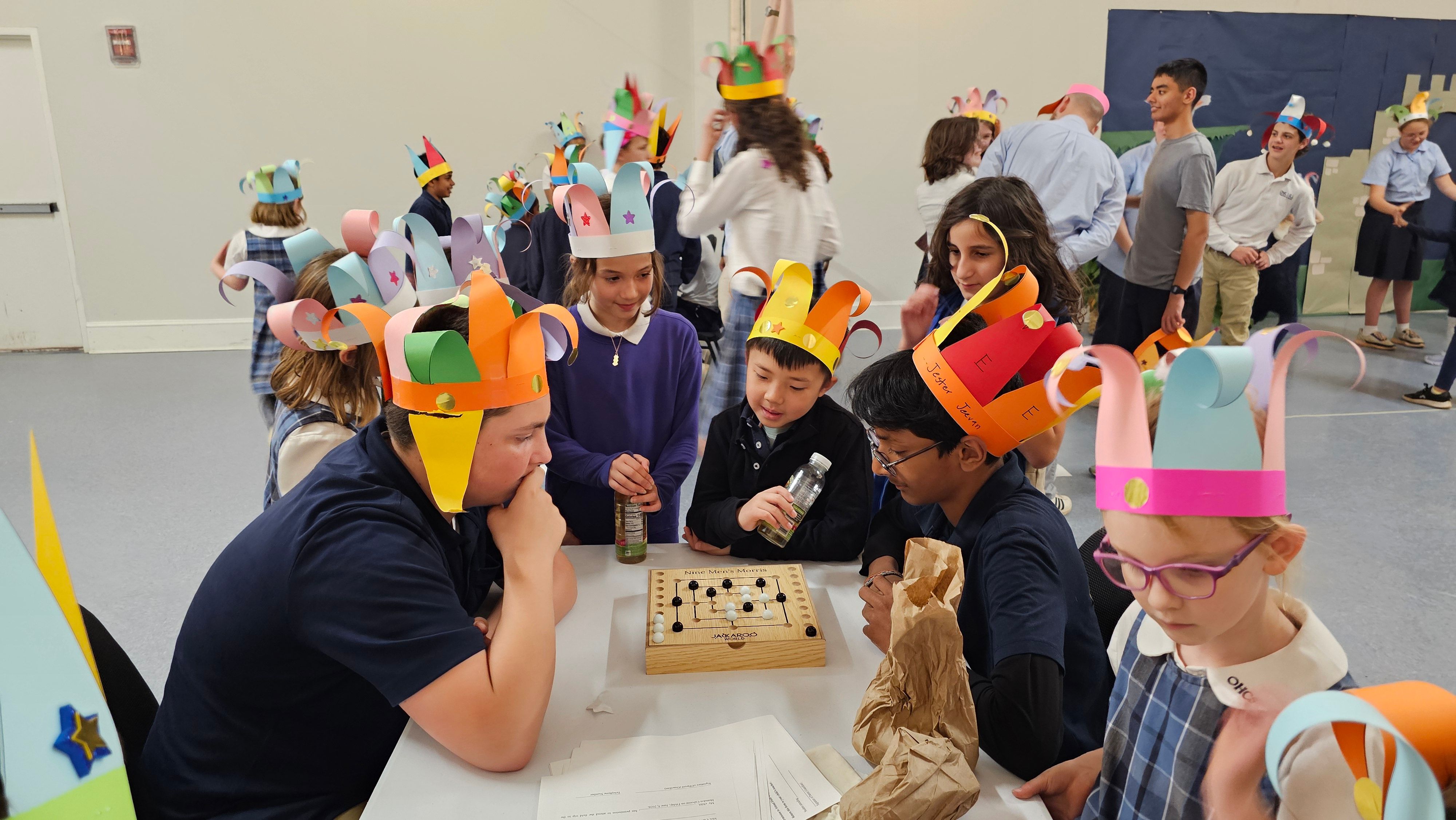
Lear’s all licensed fool was an easy focus for the festival. Students helped their younger school mates make jester hats as a reminder that we can use humor to soften hard truths. Additionally, students prepared simple games and activities to share the context of Shakespeare and the themes in Lear. They offered challenges to arm wrestle and play Othello or Nine Men’s Morris. They led children in simple dances of Ring Around the Rosies and London Bridge is Falling Down, which both have dark stories that are made lighter through song and dance, similar to the way the festival shared the tragedy of King Lear.
Gloucester: But have I fall’n or no? Edgar: From the dread summit of this chalky bourn. Look up a-height: the shrill-gorg’d lark so far Cannot be seen or heard: do but look up. Gloucester: Alack! I have no eyes. (Act 4, Scene 6, Lines 56-60)
Conclusion Our annual Shakespeare Festival is growing into a bigger production each year, one that benefits the whole school. The upper school gets practice planning and hosting an event, which they were quite successful with this year. It also forces the rhetoric students to think through Shakespeare’s writings and make them applicable today. Mostly, the festival builds excitement in younger students who look forward to years to come of Shakespeare’s rich language and timeless stories.